
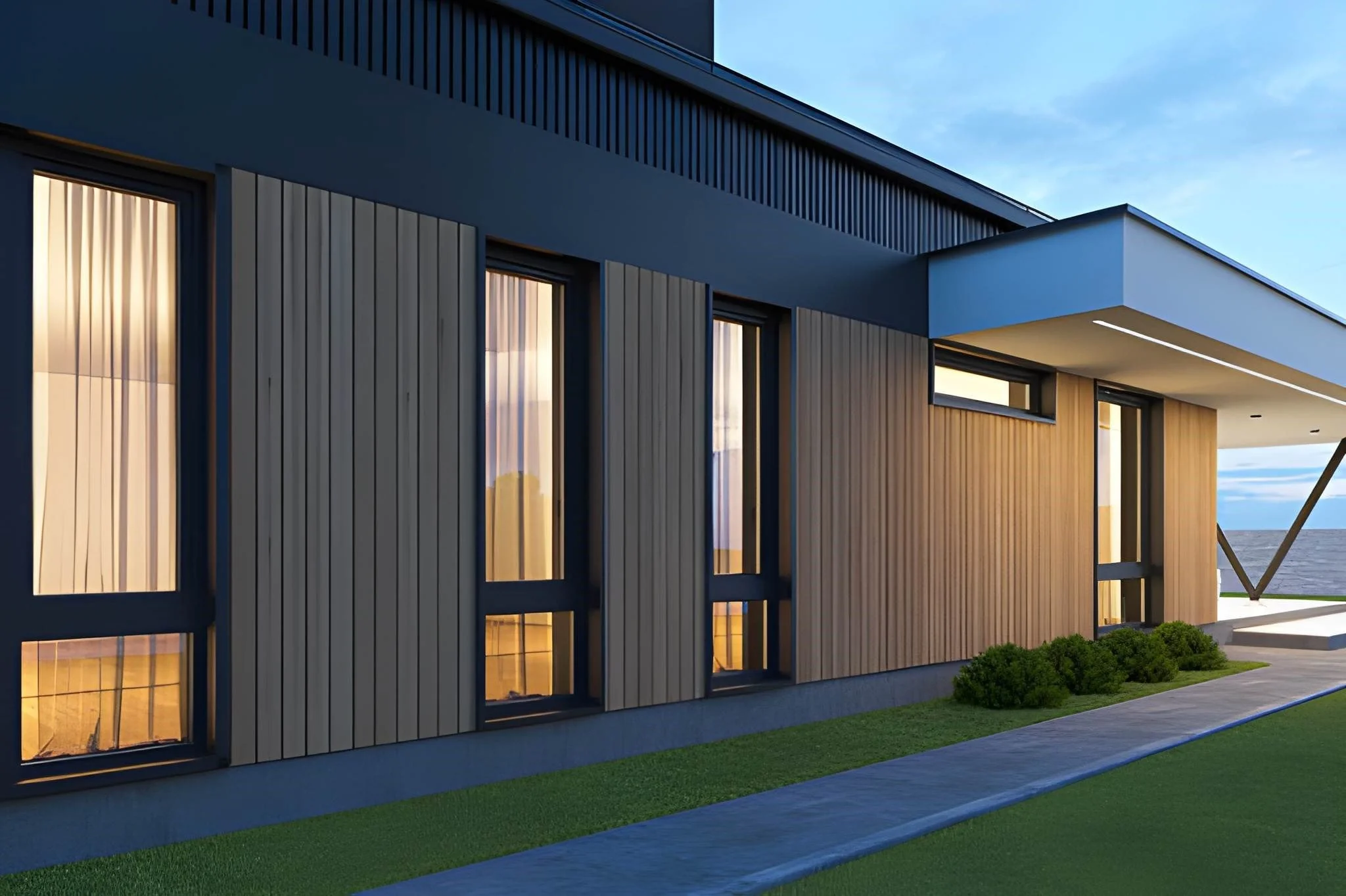
Precision matters when fabricating flush wall panels because the finished facade depends on accurate dimensions, straight edges, consistent joints, and properly formed details. A small error in one panel can become more visible as it connects with the next panel.
For architects, contractors, and project managers, accurate fabrication means fewer surprises during installation and a closer match to the approved design. Precision also matters around windows, doors, corners, and transitions. Careful fabrication creates panels that are prepared for their intended locations instead of relying on extensive adjustments in the field.
Small Errors Can Become Visible Across a Large Wall
· Panel Alignment:
Accurate panel alignment keeps vertical and horizontal lines consistent across the facade. Even a slight shift can become noticeable as more panels are installed along a large exterior.
· Consistent Panel Dimensions:
Matching panel dimensions create an orderly appearance across the wall. Variations in width or height can interrupt the planned pattern and make the facade look uneven.
· Straight Panel Edges:
Clean, straight edges allow adjacent panels to meet properly. Precise fabrication reduces visible irregularities and supports a sharper appearance across long commercial building elevations.
· Joint Spacing:
Consistent joint spacing creates visual rhythm across the facade. Uneven gaps can draw attention and make otherwise well-designed flush wall panels appear poorly coordinated.
· Large-Surface Consistency:
A small fabrication error may become more obvious when repeated across a large wall. Careful production keeps individual sections visually connected from one end to another.
Openings and Corners Require Extra Attention
Walls are rarely completely uninterrupted. Windows, doors, vents, corners, and changes in wall direction all create points where panels must meet other building components.
These areas require more than simply cutting a panel to a measured length. The surrounding details need to be considered so the finished sections connect neatly with adjacent materials, trims, and flashing.
Custom fabrication can also accommodate unusual dimensions or architectural details. This gives project teams more freedom to follow the intended design without making the facade look pieced together.
Consistent Finishes Strengthen the Overall Look
Panel accuracy includes more than shape and size. Material, color, texture, and finish also influence the final appearance. A large exterior can quickly show differences between components if specifications are not followed carefully.
Architectural exterior panels are selected for both visual and practical reasons. Consistent fabrication allows specified materials and finishes to carry across the facade without unnecessary variation.
Before production, project details should clearly identify the required material, thickness, finish, profile, and dimensions. Clear specifications give fabrication teams a reliable guide and reduce confusion during production.
Precision Can Reduce Field Adjustments
Field modifications can take extra time, especially when a project includes a large number of panels. Cutting or reshaping components on-site may also make it harder to maintain the planned appearance.
Accurate fabrication gives installers components prepared for their intended use. This can support a more organized installation process and reduce avoidable corrections.
For commercial construction teams, fewer adjustments can also make scheduling easier. Panels, trims, and related components can be coordinated with the construction sequence instead of being treated as separate pieces of work.
Custom Work Starts With Detailed Project Information
Precision depends on good information before fabrication begins. Drawings, dimensions, material selections, panel layouts, and special conditions all provide important direction.
Useful information may include:
Panel dimensions and profiles
Locations of openings
Corner and edge conditions
Required finishes and materials
Trim and flashing details
A detailed review can identify potential conflicts before production starts. It also gives architects and contractors a clearer connection between the approved design and the fabricated components.
Precision Supports Better Architectural Results
The value of accurate fabrication becomes easiest to see after installation. Straight panel lines, controlled spacing, clean transitions, and consistent finishes give the exterior a more complete appearance.
For projects using flush wall panels, fabrication is therefore an important part of the architectural result, not simply a production step. Careful work can preserve design details while supporting a smoother path from drawings to the finished facade.
FAQs
What makes flush wall panels different from other wall panels?
Flush wall panels create a clean, streamlined exterior appearance. Their visual quality depends heavily on consistent panel dimensions, joint alignment, edges, and transitions across the building facade.
Why are accurate measurements important for panel fabrication?
Accurate measurements allow panels to match the planned wall layout and surrounding details. They can also reduce unnecessary cutting and adjustments during installation.
Can wall panels be made for unusual building dimensions?
Yes. Custom fabrication can accommodate project-specific dimensions, openings, corners, profiles, and other architectural requirements.
What details should be reviewed before fabrication?
Panel sizes, materials, finishes, openings, corners, trims, flashing, and approved drawings should be reviewed before production. Special conditions should also be identified early.
Where can architectural exterior panels be used?
Architectural exterior panels can be used on commercial, institutional, industrial, and retail buildings where a clean and coordinated exterior appearance is required.
Final Thoughts
Precision gives a flush facade its consistency. Accurate fabrication can improve panel alignment, protect important architectural details, and reduce unnecessary field corrections. For architects and contractors, careful production supports both the appearance and practical installation of flush wall panels.
Turn Precise Designs Into Finished Facades
Custom architectural fabrication requires careful attention from the first measurement to the finished panel. Dalton Building Enclosures provides custom fabrication, architectural products, shipping, and experienced installation support for commercial building projects.